Skin Barrier 101: How to Support It Naturally
If your skin suddenly feels tight, stingy, rough, or more reactive than usual, your skin barrier may be under stress. That does not always mean something is seriously wrong. In many cases, it means your skin is dealing with too much irritation at once: harsh cleansing, too many active ingredients, friction, dry weather, or a routine that has become more aggressive than your skin can handle.
The good news is that barrier support is usually less about buying more products and more about reducing irritation load. A calm, consistent routine often does more than a shelf full of „repair“ products used all at once.
This guide explains what the skin barrier does, what commonly disrupts it, and how to build a gentle routine that gives skin a better chance to settle down.
What the skin barrier actually does
Your skin barrier is the outer protective layer of the skin. Its job is simple but important:
- keep water from leaving the skin too quickly
- reduce how easily irritants get in
- help skin stay comfortable, flexible, and resilient
When that barrier is doing well, skin usually feels smoother and more stable. When it is irritated or weakened, skin often becomes more reactive. Products that felt normal a few weeks ago may suddenly burn, sting, or leave you looking red and uncomfortable.
That is why barrier problems can feel confusing. The issue is not always one „bad“ product. Often it is cumulative stress.
Signs your barrier may be stressed
Barrier stress does not look exactly the same on everyone, but common signs include:
- tightness after cleansing
- stinging when you apply products
- rough or flaky texture
- redness that shows up easily
- skin that feels both dry and oily at the same time
- increased sensitivity to products, weather, or friction
These signs can overlap with eczema, rosacea, seborrheic dermatitis, or allergic reactions, so it is smart to stay cautious. If symptoms are severe or keep getting worse, do not assume it is „just barrier damage.“
What most often weakens the barrier
Usually the problem is not one dramatic mistake. It is a pattern.
Common triggers include:
- cleansing too often
- using harsh surfactants or strongly fragranced products
- washing with very hot water
- over-exfoliating with acids, scrubs, or cleansing tools
- layering too many active ingredients at once
- using prescription-strength or high-strength actives too aggressively
- dry air, cold weather, indoor heating, and low humidity
- friction from towels, washcloths, picking, or rubbing
Stress, poor sleep, and a generally overloaded routine can also make recovery slower. Skin tends to do better when the routine becomes more predictable.
The goal of recovery: less irritation, more consistency
When skin is stressed, the goal is not to chase immediate glow. The goal is to stop making the situation worse.
That usually means:
- simplifying the routine
- choosing fragrance-free, low-irritation basics
- avoiding unnecessary experimentation
- giving the skin enough time to respond
Many people sabotage recovery by changing products every few days. If your skin is reactive, constant switching makes it harder to tell what is helping and what is keeping the cycle going.
A simple morning routine that supports the barrier
For most people with irritated or reactive skin, a morning routine can stay very basic:
- Use a gentle cleanser only if you need one. If your skin is very dry, a lukewarm water rinse may be enough in the morning.
- Apply a simple hydrating layer if your skin tolerates it well.
- Use a fragrance-free moisturizer that helps reduce water loss.
- Finish with daily broad-spectrum sunscreen.
The most important point is not the number of steps. It is how non-irritating those steps are.
If a product claims to be „active,“ „deep exfoliating,“ „pore refining,“ or „fast resurfacing,“ it is usually not the first thing to reach for during barrier recovery.
A simple evening routine that does not overdo it
Evening should also stay uncomplicated:
- Remove sunscreen and dirt with a gentle cleanser.
- Apply one hydrating or soothing layer if needed.
- Use a moisturizer that feels protective enough for your skin type.
If your skin feels dry but also easily irritated, richer is not always worse. Sometimes a plain cream or balm works better than a lightweight formula full of extra botanicals, fragrance, or acids.
The test is practical: does your skin feel calmer 10 to 20 minutes later, or hotter and more reactive?
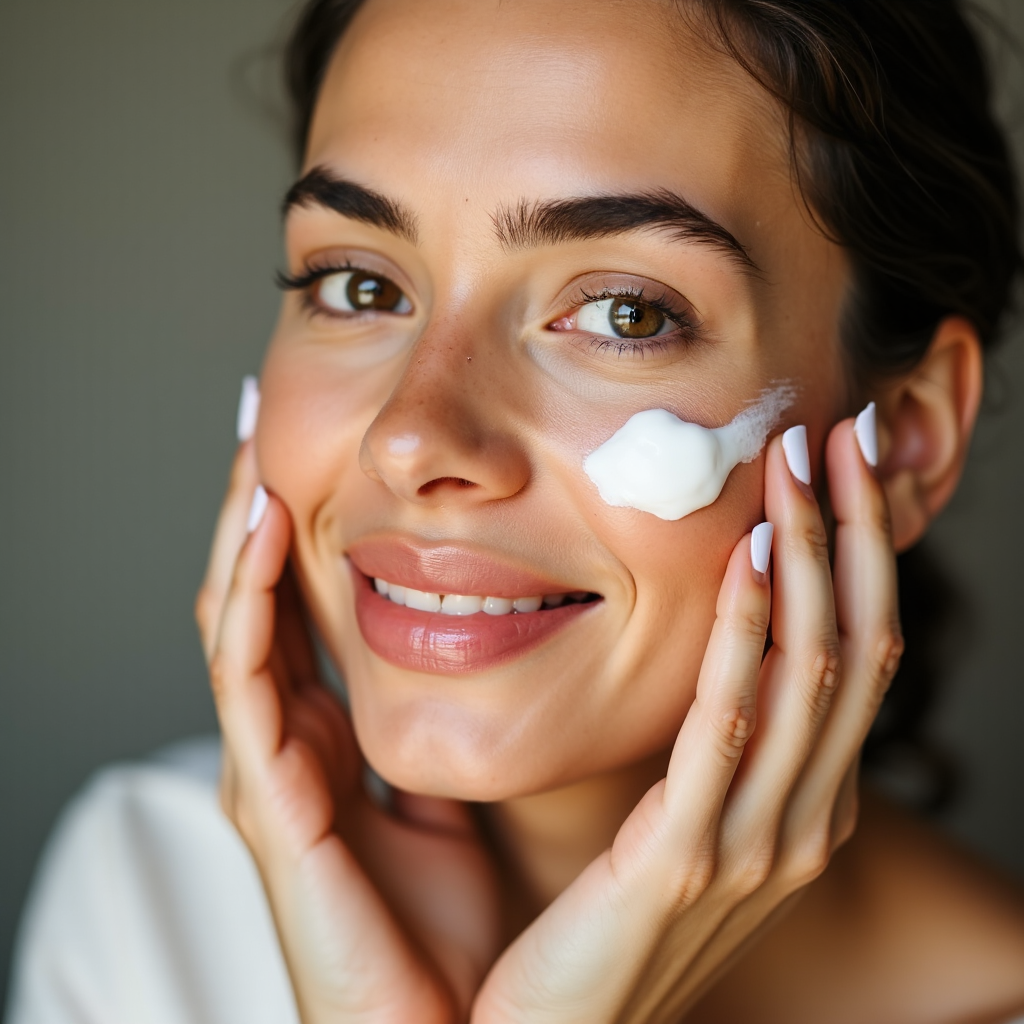
Product types that usually make more sense during recovery
You do not need a perfect ingredient list. You need a calmer routine.
During recovery, many people do better with products that are:
- fragrance-free
- low in unnecessary actives
- designed for dry or sensitive skin
- consistent from day to day
Supportive formulas often focus on humectants, emollients, and occlusive support rather than aggressive treatment claims. In real life, that often means a gentle cleanser, a simple moisturizer, and sunscreen are enough for the first phase.
If your skin is very reactive, „more soothing products“ can still become too much if you layer too many at once.
What to pause temporarily
This is where many people recover faster.
While your skin is irritated, it often helps to pause:
- strong exfoliating acids
- retinoids if they are clearly worsening irritation
- physical scrubs
- cleansing brushes and rough washcloths
- strongly fragranced products
- multiple new serums introduced at the same time
This is not a forever rule. It is a timing rule.
You are not trying to prove that actives are bad. You are trying to give your skin a quieter baseline so it can settle.
A practical 7-day barrier reset
If your skin has become „angry“ but not severely inflamed, this simple reset can help:
Day 1 and 2
- strip the routine down to cleanser, moisturizer, and sunscreen
- stop exfoliants and strong actives
- use lukewarm, not hot, water
Day 3 and 4
- keep the same base routine
- if skin feels dry, add one simple hydrating product only
- avoid testing anything trendy or heavily fragranced
Day 5 and 6
- pay attention to tightness, burning, and visible redness
- if skin feels calmer, do not rush to add treatments back in
- keep makeup and cleansing friction as low as possible
Day 7
- keep whatever reduced irritation
- do not reintroduce more than one product at a time
- wait several days before deciding whether a new step is helping
This kind of reset is boring. That is part of why it works.
How to reintroduce actives without restarting the cycle
Once skin feels stable for at least one to two weeks, reintroduce actives slowly:
- add only one active at a time
- start at low frequency
- give your skin several days to respond
- stop increasing frequency if stinging, peeling, or redness starts building again
The mistake is not using an active. The mistake is adding multiple variables at once and then trying to guess what caused the reaction.
If you want to patch test a new product, use a small area first and watch for burning, rash, swelling, or persistent redness before using it more broadly.
Small environment changes that matter more than people think
Products are only part of the picture.
Barrier recovery often goes better when you also:
- shorten hot showers
- stop over-cleansing after workouts
- avoid rubbing the skin dry with rough towels
- reduce friction from repeated wiping or picking
- use humidity support indoors during very dry seasons if your environment is harsh
These changes are not glamorous, but they reduce the background stress that keeps skin from calming down.
Mistakes that slow recovery
Some of the most common recovery mistakes are:
- product hopping every few days
- treating every dry patch with another „fix“ product
- layering acids, retinoids, and brightening products together
- assuming stronger means better
- skipping sunscreen while the skin is already reactive
Consistency beats intensity here. A simple routine repeated for two to four weeks is often more useful than a complicated routine that changes every weekend.
When it may be more than simple barrier stress
Sometimes what looks like a damaged barrier is actually a skin condition that needs a better diagnosis.
Get professional advice if:
- burning or stinging is persistent
- redness keeps worsening despite a gentle routine
- skin is cracking, weeping, crusting, or painful
- there is swelling, rash, or a reaction pattern that suggests allergy
- symptoms are affecting sleep or daily life
That does not mean you have done something wrong. It just means home routine changes have limits, and sometimes you need clearer answers.
Main points to remember
- Barrier support is usually about reducing irritation load.
- A short, gentle routine often works better than a long one.
- Pause the products that are obviously pushing your skin too hard.
- Reintroduce actives slowly, one at a time.
- If skin is worsening or very painful, do not keep experimenting.
Your next step
If your skin tends to be reactive in more than one area, keep your routine gentle across the board. For a related read, continue with 9 Natural Remedies for Itchy Scalp (with Daily Routine), especially if irritation is showing up on the scalp as well as the face.


